


 05,Feb 2025
  0 Comment
A 45 degree elbow changes fluid direction by 45 degrees in piping systems. This creates smoother transitions than traditional 90-degree bends.
When compared to sharper bends, these fittings reduce product impact against pipe walls.
For contractors and system designers, 45 degree elbows offer practical solutions where flow efficiency matters most.
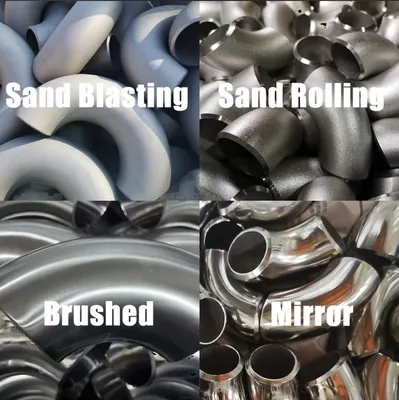
A 45 degree elbow offers a range of benefits to users, including:
The gentler angle reduces turbulence and pressure loss in the system. This means better fluid movement and lower energy costs for pumping.
Less impact against pipe walls means reduced wear on system components. Your piping system lasts longer with these gradual transitions.
The 45-degree angle offers more flexibility in tight spaces. This helps contractors design more efficient piping layouts.
There are two main types of 45-degree elbow fittings:
These fittings allow multiple pipes to connect at a 45-degree angle, helping distribute flow more efficiently.
They are often used in drainage and industrial systems where multiple pipelines meet.
These connectors join three pipes at a 45-degree angle, commonly used in structures requiring angled support or custom fluid routing.
They offer a secure and stable connection while maintaining smooth flow transitions.
Planning where to use 45 degree laterals in your system makes installation straightforward and effective.
Your measurements must account for both horizontal and vertical offsets to achieve proper alignment.
When connecting multiple sections, 3 way 45 degree angle joint connectors need proper support to maintain system integrity.
Should you use a 45-degree or a 90-degree elbow? It depends on your system’s flow needs, space constraints, and efficiency goals.
A 45-degree elbow is best when you need a smoother transition with less pressure loss, while a 90-degree elbow works better in tight spaces where a sharper turn is necessary.
We’ve created this table to help you compare the two and decide which one fits your setup.
| Feature | 45-Degree Elbow | 90-Degree Elbow |
| Angle of Turn | 45 degrees | 90 degrees |
| Flow Efficiency | Higher – allows smoother transitions | Lower – creates sharper turns |
| Pressure Loss | Lower – reduces resistance | Higher – more resistance to flow |
| Turbulence | Less turbulence compared to 90-degree elbows | More turbulence due to sudden change |
| Wear on Pipes | Less wear due to gradual turn | More wear as fluid impact is stronger |
| Common Uses | HVAC, plumbing, industrial piping | Tight spaces, compact piping systems |
| Space Requirements | Takes up more space due to gradual bend | Requires less space, useful in tight areas |
| Installation Complexity | Easier in open spaces but needs planning for alignment | Easier in tight spaces but increases system stress |
Now that you know what a 45-degree elbow does, you can choose the right fittings to keep your system efficient.
It works best when you need a smooth turn that reduces pressure loss and wear on your pipes.
If you’re planning a piping system, make sure every connection supports flow and durability.
For strong, reliable flanges that keep everything secure, Longan Flange has what you need.
Use a 45-degree elbow when you need to change the direction of flow while keeping pressure loss low.
Yes, two 45-degree elbows create a smoother transition, reducing resistance and improving flow.
Yes, they are available in PVC, copper, steel, and alloy materials for different applications.
 +86-15727821389 +86-15355931307
 Tel:
Tel: +86-15727821389
 E-mail:
 mft@longanflange.com
mft001@longanflange.com
 Address:
 620 Kongo Mingzhu Road, Yongxing Street, Longwan District, Wenzhou City, Zhejiang Province, China.


