


 05,Feb 2025
  0 Comment
Yes — but usually not as much as you think.
A single 90° elbow will slightly reduce water pressure, but in most systems, the impact is small unless you have multiple sharp turns or high flow velocity.
The real problem starts when several elbows are used together — that’s when pressure loss begins to accumulate and affects overall system performance.
This sudden shift slows the flow and drops pressure, making it harder for the system to keep water moving efficiently.
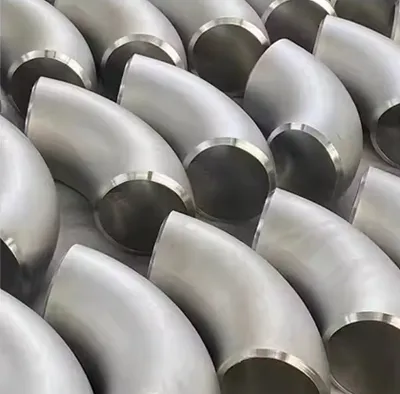
Engineers often quantify this effect using a loss coefficient (K value). A standard 90-degree elbow typically has a K value ranging from 0.3 to 1.5, depending on its radius and surface roughness.
When water hits a sharp bend, it doesn’t glide smoothly—it crashes into the pipe walls and swirls.
This turbulence creates friction, wastes energy, and reduces how much water gets through.
The more 90-degree elbows in a system, the worse the effect on pressure and flow.
A single 90° elbow can create resistance equivalent to 30–50 pipe diameters of straight pipe.
If a system has multiple elbows, the pressure loss stacks up fast and slows the water even more.
In high-flow setups, this drop lowers efficiency and forces pumps to work harder, increasing energy costs.
Pressure loss caused by a 90-degree elbow can be estimated using the formula:
h = K × (v² / 2g)
Where:
For example, a standard elbow with a higher K value will result in greater pressure loss, especially in high-velocity systems.
In practical applications, multiple elbows can significantly increase total system head loss, requiring more pump power to maintain flow.
Using two 45-degree elbows instead of one 90-degree elbow can reduce turbulence and improve flow efficiency.
Comparison:
In systems where efficiency matters more than space, 45-degree configurations are often preferred.
If you can’t avoid using 90-degree elbows, there are ways to keep water moving efficiently and prevent major pressure loss.
Sweeping elbows have a gentler curve, which helps water move more smoothly with less friction.
If you have the space, replacing sharp bends with sweeping elbows can make a big difference in maintaining flow.
A bigger pipe allows more water to move through, helping to offset the resistance caused by sharp bends.
This is especially useful in high-flow systems where maintaining steady pressure is important.
Every sharp turn adds friction, so the fewer bends you have, the better the flow.
If possible, rework your pipe layout to eliminate unnecessary turns and keep things as straight as possible.
Not sure how much pressure loss your system has? Try this quick estimator:
Estimate added pressure loss caused by 90-degree elbows and see suggestions to improve system efficiency.
Sometimes, you don’t have a choice, and a 90-degree elbow is the only way to make the connection.
If you’re working in a small area, like behind walls or inside machinery, you might need a sharp turn to fit everything in.
Pipes in homes, factories, and irrigation systems often use 90-degree elbows to change direction without taking up extra space.
Some setups require rigid angles to align pipes properly and keep fittings secure.
If sweeping elbows or larger pipes aren’t practical, a 90-degree elbow gets the job done.
Reducing pressure loss is critical for system efficiency and long-term cost savings.
At Longan Flange, we provide precision-engineered pipe fittings, including ASME flanges and custom elbows designed to minimize flow resistance.
Send us your piping layout, and our engineers will help you optimize flow performance and reduce energy loss.

High-performance Stainless Steel Weld Neck Flange (1/2″ to 24″ NPS). Engineered for high-pressure systems with factory-direct pricing and custom bolt-hole precision.
Inquiry Now
Robust socket weld flanges designed for critical temperature and high-pressure environments. Precision-machined for leak-proof durability in industrial piping.
Inquiry NowManufacturer since 2011 · Exported to 50+ countries · SS304, 316L, duplex 2205 & 2507 · Up to DN4000 · ASME, DIN, GOST & JIS · ISO 9001 & PED certified · MOQ 1 piece · Quote within 24 hours
Get a Factory-Direct Quote →90-degree elbows can slow down water flow, but they’re sometimes necessary to make a system work.
If you need to use them, plan ahead to reduce their impact by choosing better fittings or adjusting your pipe layout.
Need durable pipe fittings? At Longan Flange, we make high-quality flanges and fittings built for performance and longevity.
Contact us today to get the best fittings for your system.
Use sweeping elbows, larger pipes, or minimize sharp turns to maintain steady flow and pressure.
Yes, using two 45-degree elbows creates a smoother turn, reducing turbulence and pressure loss.
If you notice reduced water pressure or pump strain, too many 90-degree elbows could be the issue.
The K value typically ranges from 0.3 to 1.5 depending on the elbow design and radius.
Yes, larger pipe diameters reduce velocity, which helps minimize pressure loss caused by fittings.
Do 90 Degree Bends Reduce Water Pressure?

 +86-15727821389 +86-15355931307
 Tel:
Tel: +86-15727821389
 E-mail:
 mft@longanflange.com
mft001@longanflange.com
 Address:
 620 Kongo Mingzhu Road, Yongxing Street, Longwan District, Wenzhou City, Zhejiang Province, China.


