


 05,Feb 2025
  0 Comment
A lap joint flange (LJF) is a two-piece assembly consisting of a stub end welded to the pipe and a separate backing flange that slides over it.
A stub end is just the short pipe section that is welded to the main pipeline and provides the sealing surface for the flange connection.
The key difference is that a lap joint flange allows for rotation and easier alignment, whereas a stub end is a fixed component that must be welded to the pipe.
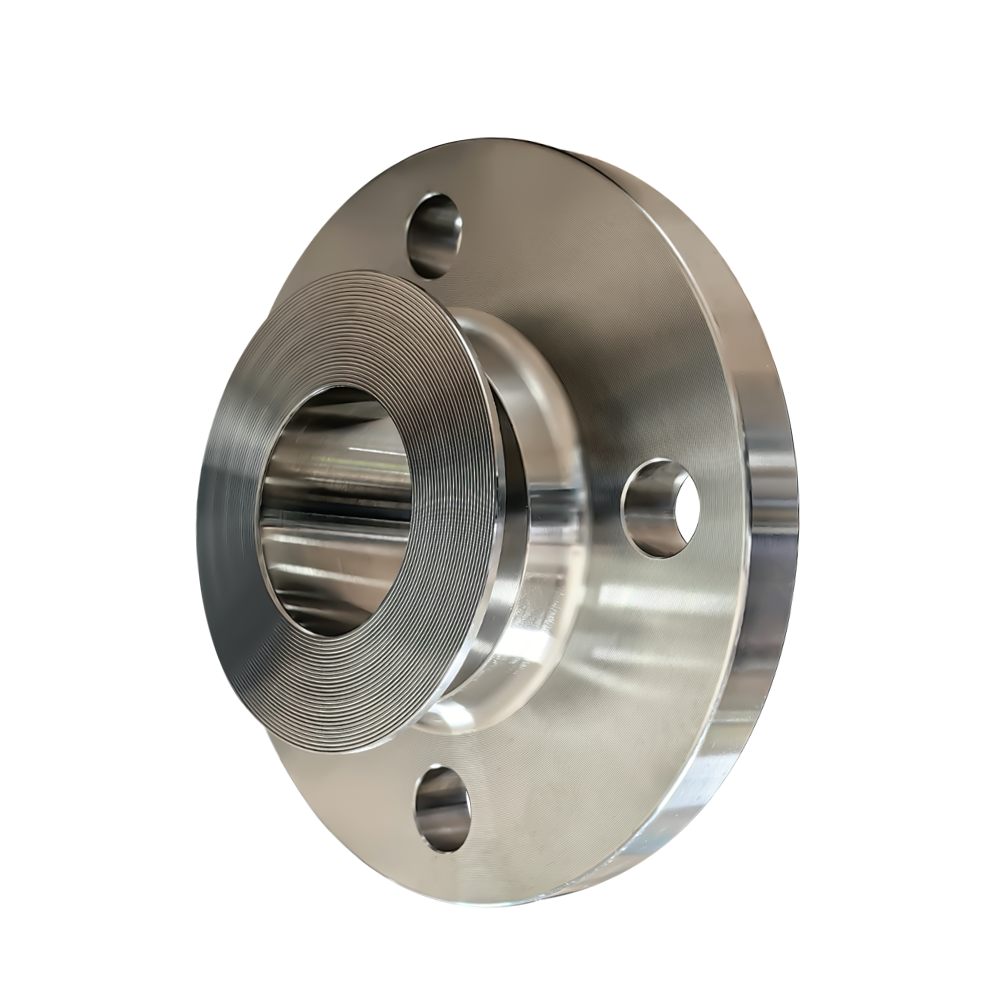
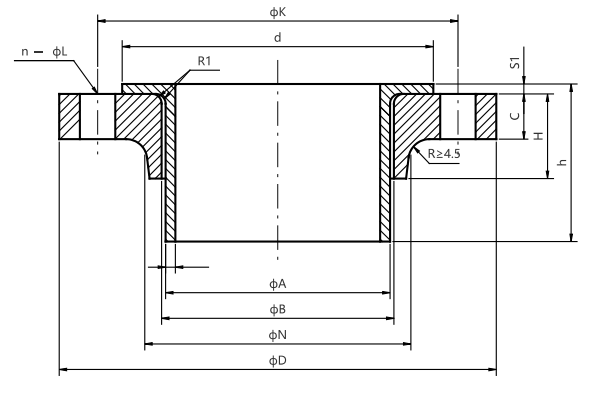
A lap joint flange is designed for flexibility and cost savings in piping systems that require frequent maintenance or disassembly.
It consists of two parts:
A stub end alone does not serve as a flange—it needs a lap joint flange to function as a complete connection.
Lap joint flanges and stub ends have different roles in a piping system.
A stub end is welded to the pipe and provides the sealing surface.
A lap joint flange includes a stub end and a loose backing flange that helps with alignment.
This table shows the main differences between them:
| Feature | Lap Joint Flange (LJF) | Stub End |
| Function | A complete flange system with a rotating backing flange. | A short pipe section welded to the main pipe. |
| Rotation | The backing flange rotates for easy alignment. | Does not rotate—fixed in place. |
| Sealing Face | No sealing face—relies on the stub end for sealing. | Provides the sealing surface for the connection. |
| Maintenance | Easy to remove without cutting the pipe. | Must be welded to the pipe, making removal harder. |
| Material Flexibility | Backing flange can be a lower-cost material. | Stub end must match pipe material. |
| Best Used For | Systems requiring frequent disassembly or realignment. | Welded piping systems where flexibility isn’t needed. |
Deciding when to use a stub end vs. a lap joint can be confusing. To help, we’ve shared some ideal scenarios where one of options works better than the other.
Manufacturer since 2011 · Exported to 50+ countries · SS304, 316L, duplex 2205 & 2507 · Up to DN4000 · ASME, DIN, GOST & JIS · ISO 9001 & PED certified · MOQ 1 piece · Quote within 24 hours
Get a Factory-Direct Quote →Now that you know the difference, you can choose the right fitting for your system.
A stub end provides the sealing face, whereas a lap joint flange makes installation easier and helps reduce costs.
If your system needs frequent maintenance or easier alignment, a lap joint flange is the better option.
At Longan Flange, we provide high-quality lap joint flanges designed for durability and efficiency.
Get in touch with us today to learn more or visit our website to see a full range of flange products with details.
 +86-15727821389 +86-15355931307
 Tel:
Tel: +86-15727821389
 E-mail:
 mft@longanflange.com
mft001@longanflange.com
 Address:
 620 Kongo Mingzhu Road, Yongxing Street, Longwan District, Wenzhou City, Zhejiang Province, China.


