


 03,Nov 2024
  0 Comment
ASME B16.5 defines standard dimensions, pressure ratings, and material requirements for pipe flanges and flanged fittings used in industrial piping systems.
In simple terms, it ensures that flanges from different manufacturers are interchangeable, safe to use, and suitable for specific pressure and temperature conditions.
Engineers use this standard to select the correct flange class (150 to 2500) based on system requirements.
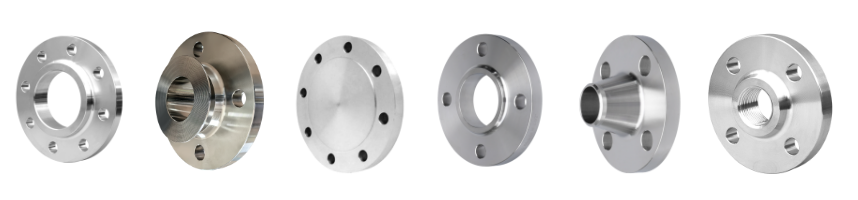
That said, ASME B16.5 sets down uniform guidelines for designing and manufacturing these components. This ensures consistency across industries and makes it easier for engineers and manufacturers to work together. This will also help you maintain safety and performance by preventing costly issues like component mismatches and system failures.
Read this article further to explore the scope of ASME B16.5 and how you can use it to help you meet compliance requirements.
ASME B16.5 covers recommendations regarding pressure-temperature ratings, materials, dimensions, tolerances, marking, testing, and methods of designating openings for pipe flanges and flanged fittings [1].
To work effectively with pipe flanges and flanged fittings, you should first understand what ASME B16.5 covers and where its limits lie.
ASME B16.5 covers pipe flanges and flanged fittings made from cast and forged materials for industrial piping systems.
It specifies requirements for:
This standard is widely used to ensure consistency and interchangeability across global piping systems.
Considering this standard’s full title, Pipe Flanges and Flanged Fittings: NPS 1/2 through NPS 24, Metric/Inch Standard, the first limitation is the nominal pipe size (NPS) range it covers. The specifications are as follows:
For Flanges:
For Flanged Fittings:
Additionally, the standard is specific about materials:
ASME B16.5 defines how much pressure a flange can safely withstand at different temperatures.
As temperature increases, the allowable pressure decreases.
To use this system correctly:
Step 1: Identify material group
Check the flange material specification (e.g., ASTM A105, A350).
Step 2: Determine operating temperature
Identify the maximum operating temperature of the system.
Step 3: Find allowable pressure
Refer to the pressure–temperature rating table for the material group.
Step 4: Select class rating
Choose a class (150, 300, 600, etc.) that meets or exceeds the required pressure at operating temperature.
ASME B16.5 sets out standardized dimensions for flanges and flange fittings based on two factors: the class designation and nominal pipe size (if you recall NPS earlier).
This means that, for example, all Class 300 flanges with an NPS of 4 – regardless of the material – will share the same bolt hole spacing, outside diameter, thickness, and other crucial dimensions.
Of course, there will be variations in the dimensions depending on the type of flange or flange fitting considered:
Types of flanges include:
Used in low-pressure applications where easy installation and alignment are required.
Used in low-pressure systems where welding is not possible or required.
Used in systems requiring frequent disassembly or alignment flexibility.
Used in high-pressure and high-temperature systems where structural strength and stress resistance are critical.
Used for small-diameter, high-pressure piping systems requiring strong leakage resistance.
Used to close the end of a pipeline or isolate sections of a system for maintenance or testing.
Types of flange fittings include elbows, tees, reducers, cross, and many more
Explore ASME B16.5 Flange Dimension>>>
ASME B16.5 sets down the restrictions about the material used in the manufacturing of flange and flange fittings. It classifies accepted materials into groups with their corresponding nominal designations and applicable ASTM specifications.
These materials include (but are not limited to):
Engineers and designers will need to refer to these material specifications to determine the appropriate class designation of the flange or flange fitting they require.
ASME B16.5 requires manufacturers to place identification markings on flanges and flange fittings. These include:
This information helps engineers and quality officers easily identify the specifications of flanges during selection, installation, and maintenance, preventing the use of incorrect or incompatible components.
ASME B16.5 includes specific tolerances, which are the acceptable limits of variation in a flange or fitting’s dimensions, as well as its facings, thickness, bore diameters, and so on.
In any production process, minor size variations can happen due to machine limitations, material flexibility, or even small temperature changes.
By establishing set tolerances, ASME B16.5 gives manufacturers clear guidelines to ensure deviations fall within an acceptable range, allowing the flange or fitting to work as intended.
ASME B16.5 includes requirements for pressure testing for flange fittings.
Pressure testing is a way to confirm that flange fittings can handle the pressure levels they’re rated for without leaking or failing. This standard specifies the test conditions, test fluid, duration and criteria for acceptance.
This standard also includes requirements and recommendations for flange bolting, gaskets, and joints, as these parts are essential for reliable performance and correct assembly of flanges in piping systems.
The most common use of ASME B16.5 is to help select the “right” steel pipe flange — right in terms of performance, size, and preferred flange type. Here are steps for how to go about using this standard:
Go to the pressure-temperature ratings table that corresponds to your selected material group. Working your way from left to right, find the pressure rating that matches your operating temperature requirement. (This pressure rating must equal or exceed your operating pressure).
The intersection of these values will give you your class designation.
For this, you’ll need to know the nominal pipe size (NPS) and flange type (e.g., threaded, lap joint). ASME B16.5 provides dedicated tables with dimensions for each rating class designation.
You should use ASME B16.5 when selecting or designing steel pipe flanges and flange fittings specifically, since this standard sets the minimum performance criteria and standard dimensions of these components.
Piping codes, on the other hand, should be used when you need to know the rules and criteria for the broader piping system, including allowable materials, tests and inspections, and so on [2].
They don’t dictate the specific details for individual components like flanges or valves. Instead, they refer to standards like ASME B16.5 for this purpose.
Manufacturer since 2011 · Exported to 50+ countries · SS304, 316L, duplex 2205 & 2507 · Up to DN4000 · ASME, DIN, GOST & JIS · ISO 9001 & PED certified · MOQ 1 piece · Quote within 24 hours
Get a Factory-Direct Quote →As of writing, the latest version is the ASME B16.5 – 2020 (published 2021).
To check for the latest version, you can refer to the official ASME website or other industry publications that track these standard updates.
Yes, ASME B16.5 and ANSI B16.5 refer to the same standard that outlines specifications for pipe flanges and flanged fittings.
However, keep in mind that ASME and ANSI are two distinct organizations with different focuses. ASME specializes in standards for boilers and pressure vessels, while ANSI covers standards for products and services across a wide range of sectors [3].
ASME B16.5 covers pipe flanges and flange fittings made of steel and alloys while ASMBE B16.1 focuses on gray iron pipe flanges and flanged fittings [4].
ASME B16.5 applies to pipes with sizes from NPS 1/2 up to NPS 24, while ASME B16.47 is designed for pipes NPS 26 to NPS 60 [5]. That said, ASME B16.47 covers pipes with significantly larger diameters than ASME B16.5.
To know if your flange or flange fitting is ASME B16.5 compliant, simply check the product for certification marks. You may also consult manufacturers regarding their compliance with the standard and request material test reports.
Long’an Flange is dedicated to producing high-quality, ASME/ANSI-compliant flanges and a variety of other standard pipe flanges. We also:
[1] B16.5 – Pipe Flanges and Flanged Fittings: NPS 1/2 through NPS 24, Metric/Inch Standard
[2] Piping – Codes & Standards
[3] ANSI vs. ASME: What’s the Difference?
[4] B16.1 – Gray Iron Pipe Flanges and Flanged Fittings: Classes 25, 125, and 250
[5] B16.47 – Large Diameter Steel Flanges: NPS 26 through NPS 60, Metric/Inch Standard
 +86-15727821389 +86-15355931307
 Tel:
Tel: +86-15727821389
 E-mail:
 mft@longanflange.com
mft001@longanflange.com
 Address:
 620 Kongo Mingzhu Road, Yongxing Street, Longwan District, Wenzhou City, Zhejiang Province, China.


